Zebra Haworthia Spiked Rosette
961 stitches · Full crosses only
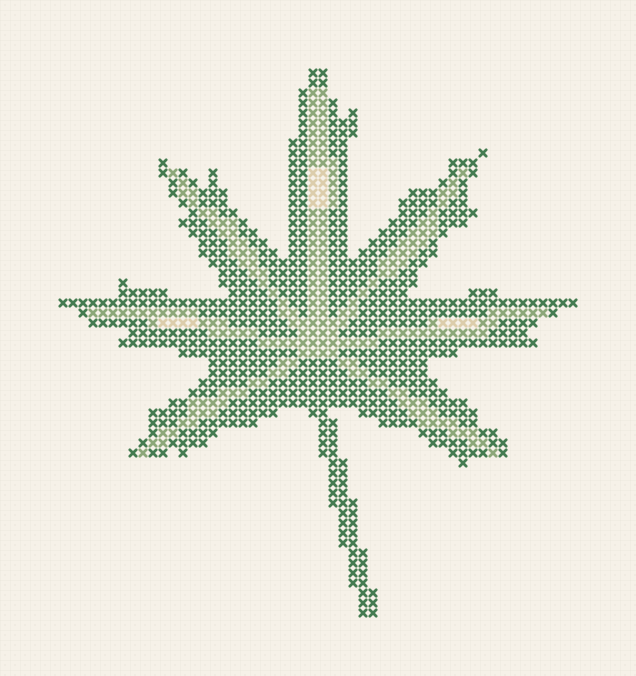
Stitch preview · simulated from the actual chart
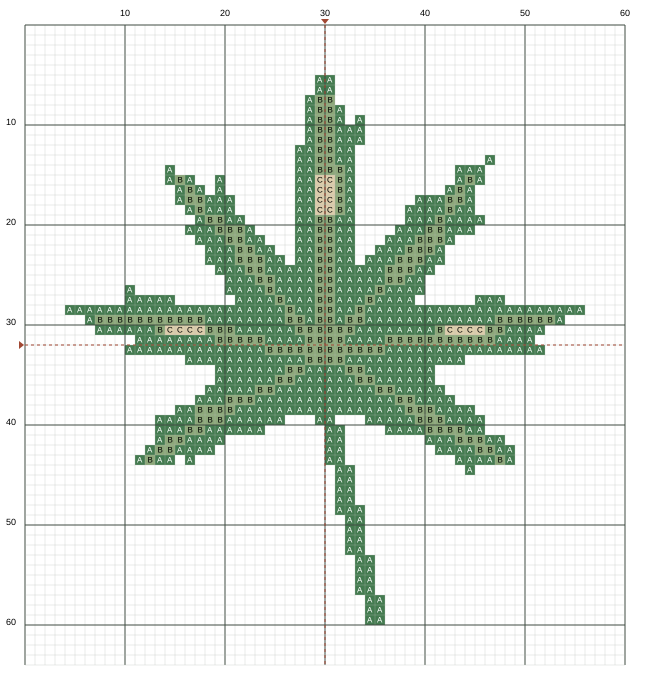
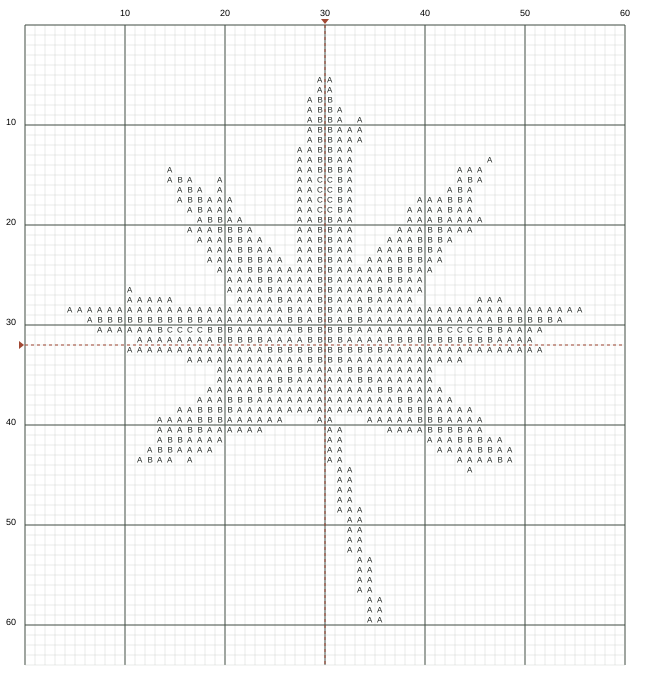
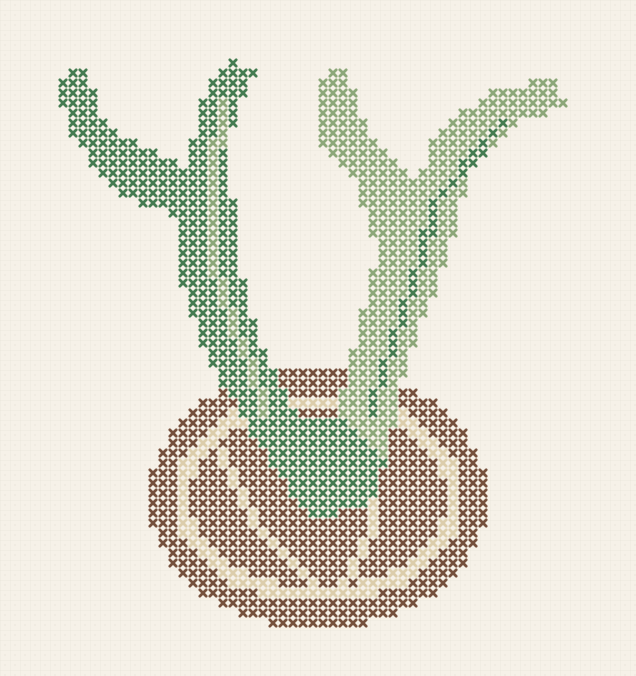
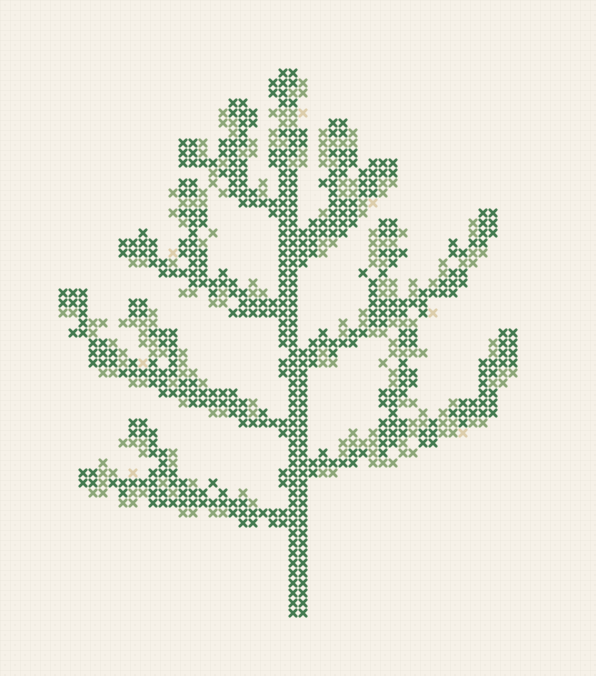
A single seven-lobed green leaf spreads above a long angled stalk, with deep narrow gaps, stepped teeth and pale highlights along its radiating folds.
Design size
4.29 × 4.57 inCut at least 11.00 × 11.25 in of Aida
The project bundle includes the complete symbol chart, DMC thread list, stitch order and illustrated finishing plan. See the finishing steps.
Free, complete PDFs. No account needed. Your choices stay on this device.
Fatsia japonica
An original, simplified full-cross interpretation of the plant. The preview is a chart simulation.
Plant reference: NC State Extension Gardener Plant Toolbox: Fatsia japonica.
Stitching focus: Count seven narrow lobes and follow their deep gaps back toward a shared center.
Estimate includes 20% extra. Tension and thread travel can change usage.
| Symbol & color | Stitches | Single-strand length | Skein equivalent | Buy if needed |
|---|---|---|---|---|
| A DMC 367 - Dark Pistachio Green | 589 | 14.88 m | 0.310 | 1 skein |
| B DMC 368 - Light Pistachio Green | 209 | 5.35 m | 0.112 | 1 skein |
| C DMC 712 - Cream | 16 | 0.53 m | 0.011 | 1 skein |
A six-strand 8 m skein supplies 48 m of single strands. Use matching colors from your stash, or buy at least one skein per color. Screen colors are a guide.
Use the listed DMC Article 117 six-strand cotton numbers for this palette. Names and numbers were checked against the manufacturer list; screen swatches are illustrations, not calibrated thread colors. Compare real skeins before stitching. These projects have not been physically sample-stitched.
DMC Article 117 number and name list · 3 selected thread colors; sewing thread is separate.
Also gather a blunt tapestry needle, a hoop and scissors. Estimated stitching time: 5.1–9.1 hours at 90–160 stitches/hour. This estimate has not been timed by a stitcher.
Stitch the green stalk upward from its lower end. Count the blade attachment before placing the shared center of the lobes.
Work the central upward lobe and the two lobes beside it. Follow their narrow pointed ends, stepped teeth and deep separating gaps.
Continue around the two left and two right side lobes. Keep all seven tips distinct and reserve the sage folds and pale highlight cells.
Fill the remaining green areas around the shared center. Check the lower notch above the stalk and leave the long outer gaps as bare fabric.
Stitch the sage ribs and narrow panels within each lobe. Add the three short cream highlight runs inside their marked ribs rather than extending them to the outer tips.
Count seven main lobe tips and inspect the smaller edge teeth. Secure short highlight runs behind the leaf, trace the stalk to its attachment and center the complete leaf in the hoop.
This design includes 14 intentional single stitches in details or stepped edges. End and restart the thread when a gap is longer than five squares.
Fatsia Seven Finger Leaf · 14 count Aida
Check the chart corners against the hoop opening, allow cloth for the rim and gather the back before adding felt.
These are measured-layout plans and original assembly diagrams. Fabric stretch, bulk, tape adhesion and the finished object have not been physically sample-tested. Make a paper dry fit and measure your actual supplies before cutting.
Diagrams are not full-size templates. Use the written dimensions and check any printer scale before tracing.
Measure the inside of the inner ring across its centre. This chart needs at least 6.77 in: its whole-chart diagonal plus 0.25 in at both ends. Make a paper chart rectangle and centre it in the opening.
Check: All four corners have the planned clearance. A width-only test misses the corners.
Measure the assembled outside diameter (7.50 in here), inner-ring outside diameter (7.25 in), and rim depth (0.38 in). Beyond the outer hoop allow depth plus 1.25 in to gather: a total trim diameter of 10.75 in.
Check: The full circle fits inside the working cloth. If it does not, keep the cloth uncut and choose larger cloth or another finish.
Put the inner ring below the fabric and the outer ring above it, screw at the top. Align the chart centre with the opening centre. Tighten gradually, keeping the fabric grain straight; recheck the front after every adjustment.
Check: The front is smooth, the chart is square and the border is even. Do this before cutting.
With fit and centring confirmed, mark a circle 10.75 in across, centred on the hoop. Check the mark lies on cloth all the way around before cutting. Keep the entire 1.63 in beyond the outside rim.
Check: A strip of missing cloth cannot be replaced by pulling harder. Stop if any part of the circle falls off the fabric.
Turn the hoop over. Run a strong thread around the fabric edge about 6 mm in from the cut, with small running stitches. Pull evenly so the cloth folds over the rim and gathers inward. Check the front again, then knot the gathering thread securely.
Check: The gathered cloth sits inside the back. It does not pull the chart off centre.
Trace the outside of the actual inner ring on felt; the entered diameter is 7.25 in. Cut a paper test circle first, then felt. Lay it over the gathered back so the raw edges and gathering thread are covered.
Check: Adjust the felt to the hardware; do not cut away the Aida gathering allowance to make the felt fit.
Work a small whip stitch around the felt edge, catching the gathered cloth behind it. Keep the needle in the back layers so it does not pierce the displayed front. Use relaxed tension and bury the final knot and tail beneath the felt.
Check: The felt is secure all around and the front has no new needle marks or puckers.
Inspect the centred front and covered back. Retighten the hoop only if it is loose. Use the hoop screw bracket or a securely tied ribbon as the hanger; check the chosen wall hook supports the hoop. Keep the work indoors and dry.
Check: The hoop remains secure under a gentle lift and the fabric has not slipped.
The sizing rules and diagrams above are original to this planner. These sources describe the underlying finishing techniques.